December 12, 2025
AI Automation
AI Generative Computing: The Cognitive Engine for B2B Scalability
Unlock the mechanics of AI generative computing for business. Learn how converting unstructured data into actionable logic via Python and LLMs redefines enterprise efficiency.
AI Generative Computing: The Cognitive Engine for B2B Scalability
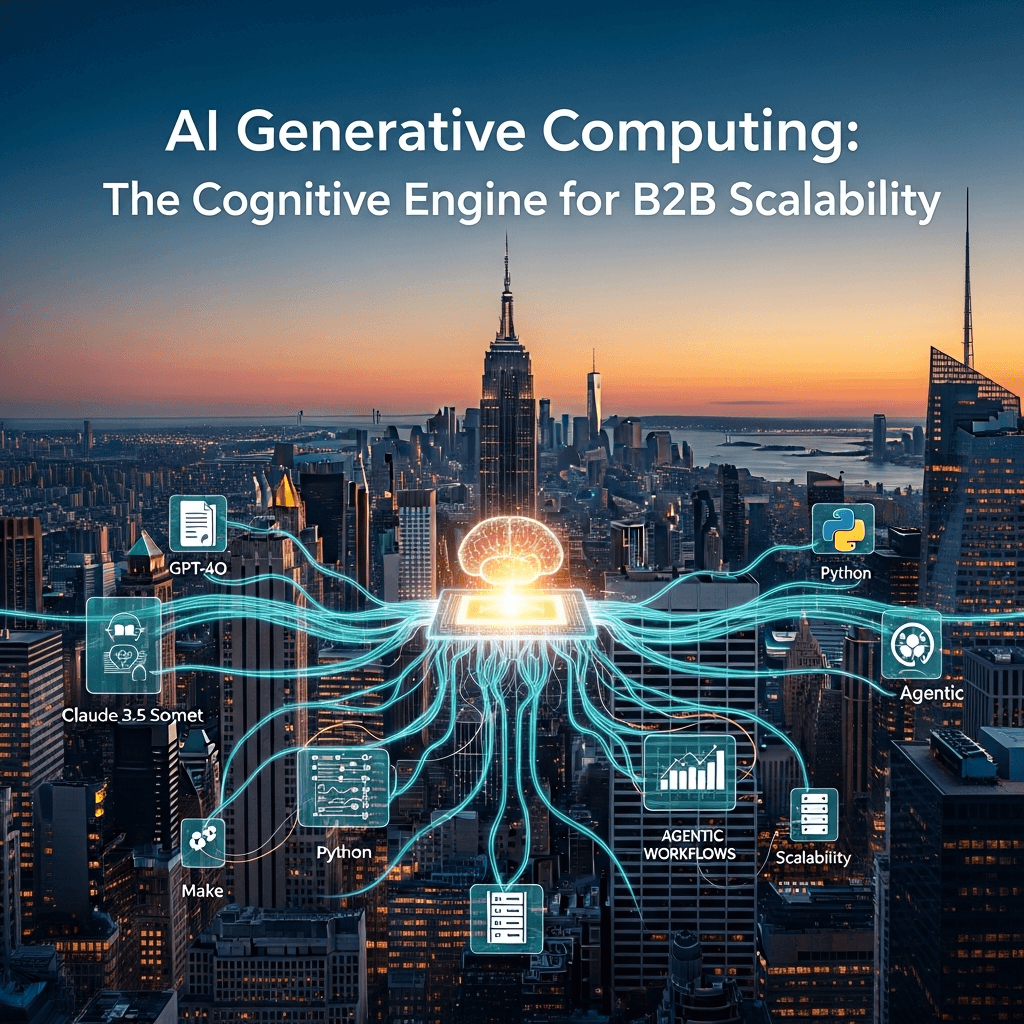
AI generative computing fundamentally alters business operations by utilizing neural networks to interpret unstructured data and generate executable logic. Unlike static scripts, it enables dynamic problem-solving through API-driven agents (via Make or Python), allowing enterprises to automate cognitive tasks like contract analysis, code generation, and predictive modeling without human oversight.
Moving Beyond Static Automation
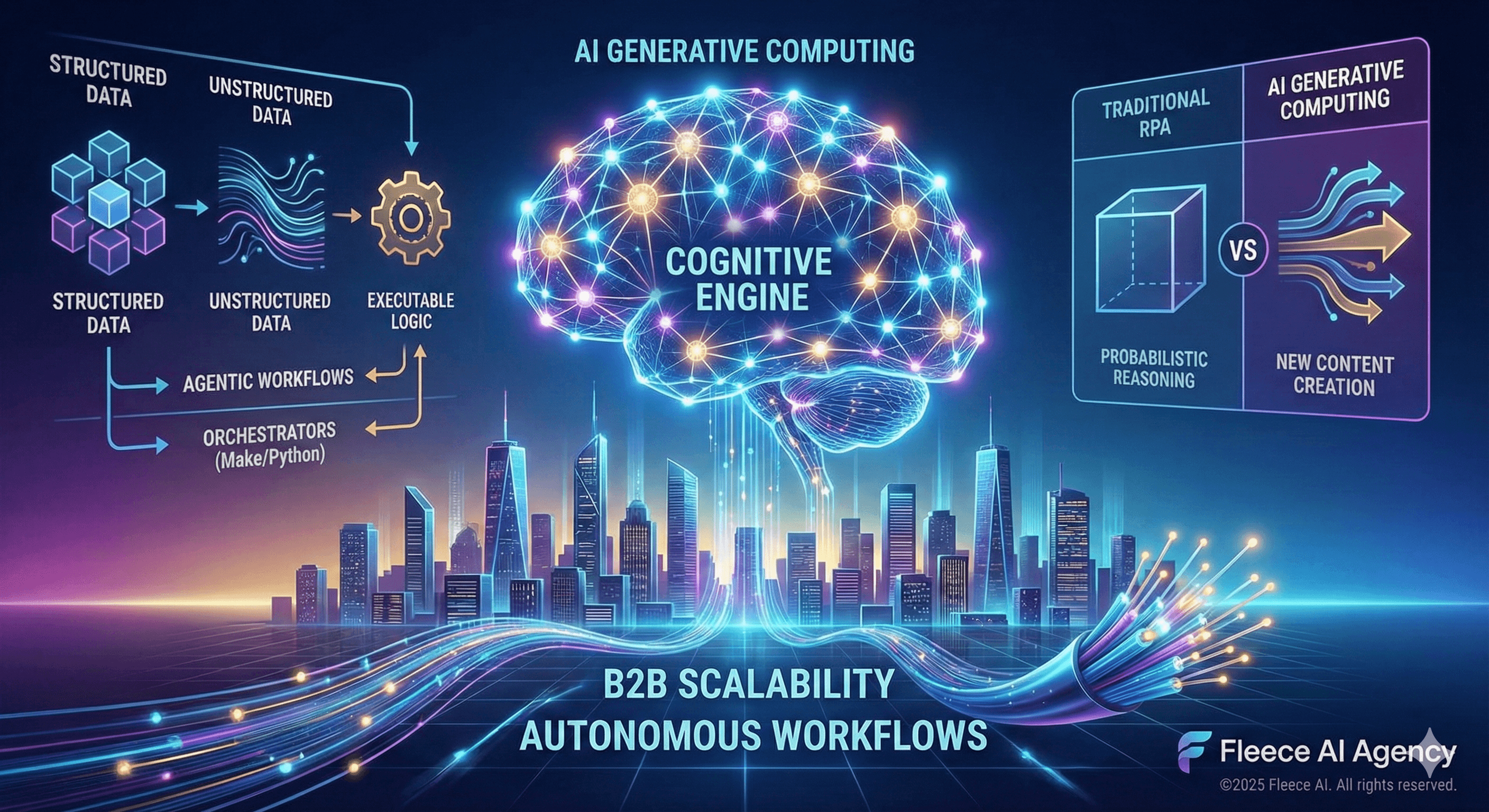
For decades, business automation relied on deterministic logic: if X, then Y. This worked for structured data but failed when identifying nuance in emails, analyzing market sentiment, or drafting complex technical documentation. AI generative computing bridges this gap. It does not simply retrieve data; it computes new probabilities to solve problems that were previously reserved for human cognition.
For a business operating in competitive markets like New York, speed is currency. Implementing generative computing means shifting from manual data processing to autonomous workflows.
The Technical Architecture of Generative Business
To implement this, we do not rely on off-the-shelf chatbots. We build Agentic Workflows. These systems combine Large Language Models (LLMs) with operational tools.
Key Components in a B2B Stack
Computation Engines (LLMs): Models like GPT-4o (OpenAI) or Claude 3.5 Sonnet (Anthropic) act as the reasoning brain, processing instructions and generating logic.
Orchestrators: Low-code platforms like Make or n8n, or code-based frameworks using Python, route data between the AI and your business apps (CRM, ERP).
Vector Databases: Tools like Pinecone provide long-term memory, allowing the AI to recall specific company policies or client history.
Comparative Analysis: Traditional vs. Generative
Feature | Traditional Automation (RPA) | AI Generative Computing |
|---|---|---|
Input Data | Structured (Rows, Columns) | Unstructured (PDFs, Audio, Emails) |
Logic | Rigid Rules (If/Else) | Probabilistic Reasoning |
Outcome | Data Transfer | New Content or Decision Creation |
Maintenance | Breaks on UI changes | Adaptable to context |
Concrete Use Case: Automated Compliance Auditing in Finance
Consider a Venture Capital firm based in New York receiving 50 pitch decks and legal agreements weekly. Manual review is slow and expensive.
The Generative Solution:
Ingestion: A Python script detects a new PDF in the secure server.
Extraction: The file is passed to an LLM via API. The model extracts key financial ratios, liability clauses, and IP ownership details.
Analysis: The AI computes a risk score based on the firm's specific investment thesis stored in a Vector Database.
Output: A structured memo is generated and pushed to the partners' Slack channel via a webhook, flagging high-risk clauses specifically.
This is not future technology. It is the current standard for high-efficiency firms.
Conclusion
AI generative computing is not a marketing trend; it is infrastructure. It transforms your data from a storage cost into an active asset. Companies that fail to integrate these computing layers risk operational obsolescence due to the sheer speed difference of their competitors.
Fleece AI Agency specializes in architectural precision. We do not sell templates; we engineer bespoke integration strategies for the B2B sector. If your organization requires a technical audit to identify high-ROI automation opportunities, contact our team to discuss your infrastructure.
📩 Contact: contact@fleeceai.agency
©2025 Fleece AI. All rights reserved.