December 8, 2025
AI Automation
Automating Internal Operational Tasks with AI in 2026: AI Operational Tasks Explored
Discover how to streamline workflows by automating internal operational tasks with AI. Fleece AI, a leading Swiss agency, explores strategies for 2025 to reduce costs and boost efficiency.
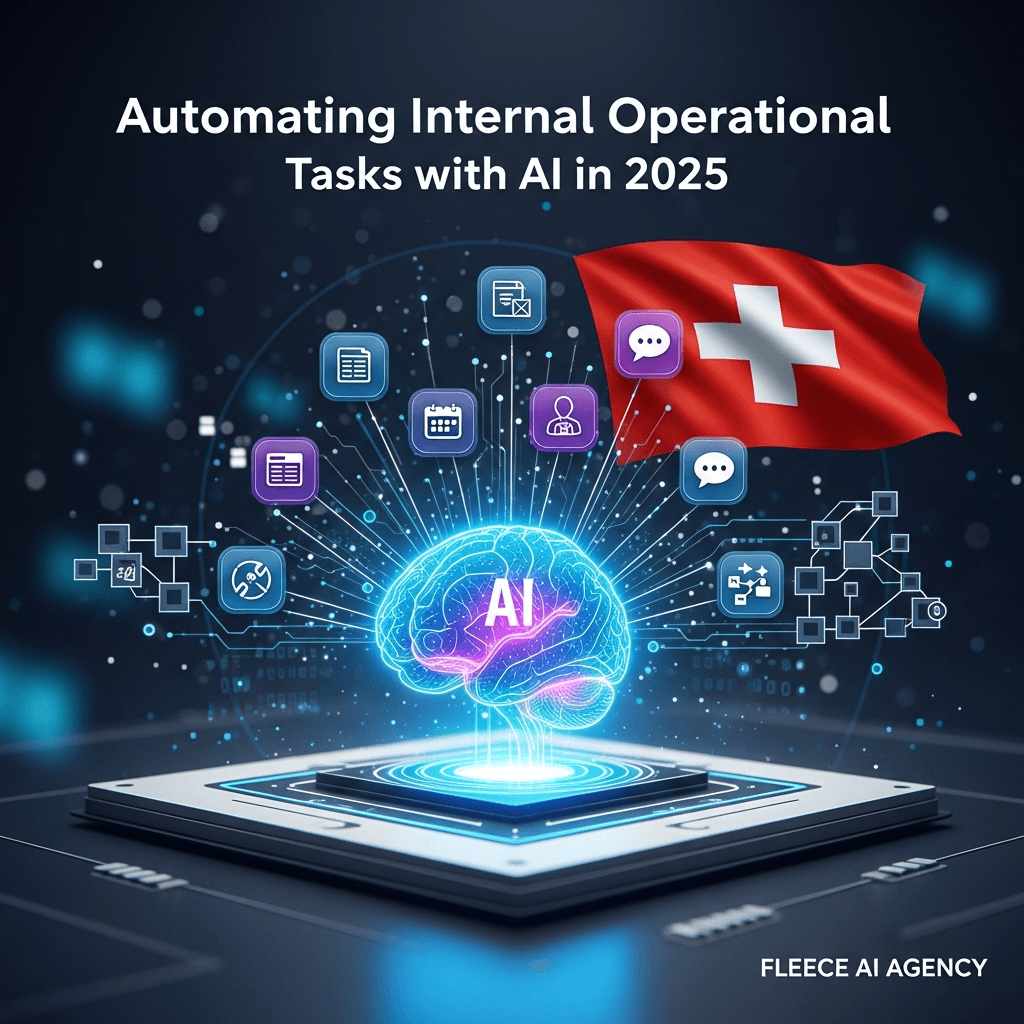
How can AI operational tasks fundamentally transform internal business operations? As we move into 2025, automating internal operational tasks with AI is no longer just a competitive advantage—it is an operational necessity.
For companies aiming to optimize productivity and reduce overhead, particularly in high-cost markets like Switzerland, the integration of Artificial Intelligence is critical. This guide explores how organizations can leverage AI to automate routine tasks effectively, moving from manual drudgery to strategic agility.
Understanding AI Operational Tasks
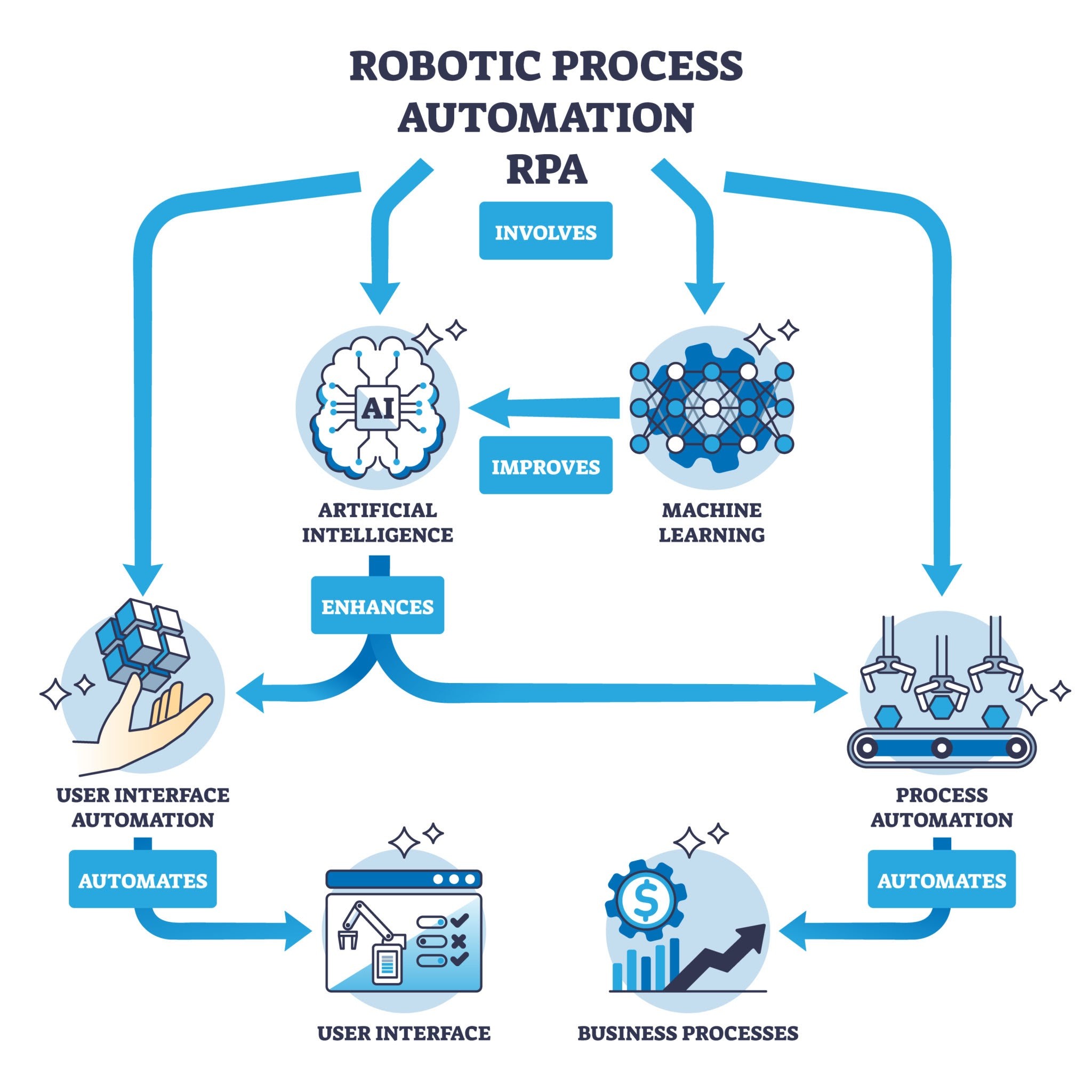
AI operational tasks refer to the deployment of artificial intelligence technologies—such as Machine Learning (ML), Natural Language Processing (NLP), and Robotic Process Automation (RPA)—to execute repetitive and rule-based activities traditionally performed by humans.
Unlike simple software scripts, modern AI solutions for businesses possess cognitive capabilities. They can "read" documents, "understand" customer intent, and "predict" supply chain disruptions.
Key Takeaway: The goal is not to replace humans, but to elevate them. By automating the routine, you free up cognitive resources for high-value strategic work.
Why Automate Internal Operational Tasks with AI?
Automating operational workflows enhances efficiency, responsiveness, and resilience. By 2025, intelligent AI systems will allow businesses to achieve:
Faster Task Completion: AI agents operate 24/7 without fatigue, drastically reducing turnaround times for processes like invoice approval or data migration.
Hyper-Accuracy: AI minimizes human error in data processing and reporting, ensuring compliance and data integrity.
Significant Cost Reduction: By reducing the hours spent on manual labor, companies can reallocate budget to innovation and growth.
Dynamic Scalability: AI solutions handle 10x or 100x workload increases instantly without the need for immediate hiring.
Data-Driven Decision Making: AI analytics provide real-time insights, supporting better strategic choices based on predictive modeling.
Top Use Cases: What Can You Automate?
Before implementing a strategy, it is crucial to know what to automate. Here are the most impactful areas:
HR & Administration: Automating onboarding workflows, scheduling interviews, and parsing resumes.
Finance: Automated invoice processing, expense report auditing, and predictive cash flow analysis.
Customer Support: L1 support handling via intelligent chatbots that resolve queries rather than just logging tickets.
Supply Chain: Demand forecasting and inventory management.
Key Benefits of AI Automation for Swiss Companies
Switzerland’s dynamic business environment is characterized by high labor costs and a demand for extreme precision. This makes the region prime territory for AI adoption.
Companies in Switzerland benefit significantly from AI consulting services that tailor solutions to local regulations (like the New FADP) and market standards. An AI agency like Fleece AI bridges the gap between complex technology and practical business application, ensuring that Swiss enterprises remain globally competitive.
AI Implementation Strategies for Automating Internal Tasks
Adopting AI for operational tasks requires a structured roadmap. Rushing into automation without a plan often leads to "pilot purgatory."
1. Assessment of Current Workflows
Identify tasks that are high-volume, repetitive, and rule-based. These are your "quick wins."
2. Choosing the Right AI Technologies
Select the right tool for the job. This might range from simple RPA for data entry to Generative AI for drafting internal communications.
3. Integration with Existing Systems
Silos kill efficiency. Ensure your AI tools seamlessly integrate with your CRM, ERP, and legacy IT infrastructure.
4. Employee Training and Change Management
Prepare your staff to work alongside AI systems. This involves upskilling teams to manage AI agents rather than performing the tasks themselves.
5. Continuous Monitoring and Optimization
AI is not "set and forget." Regular monitoring ensures the models remain accurate and efficient over time.
Comparison: Manual vs. AI Automation of Operational Tasks
Aspect | Manual Operational Tasks | AI Automated Tasks |
Speed | Variable, limited by human shifts | Consistently fast, 24/7 operation |
Accuracy | Prone to fatigue and human error | High precision (99%+) with ML improvements |
Cost | High operational and labor costs | Lower long-term OpEx |
Scalability | Linear (requires hiring more people) | Exponential (requires more compute) |
Adaptability | Dependent on retraining staff | Adapts instantly through software updates |
Frequently Asked Questions (FAQ)
What are examples of AI operational tasks?
Common examples include automating data entry from PDFs (OCR), managing initial customer support inquiries via chatbots, automated appointment scheduling, and predictive maintenance in manufacturing.
How can an AI agency assist with automating internal tasks?
An AI agency like Fleece AI offers specialized consulting services to audit your workflows, provide tailored AI training, design custom automation architectures, and ensure seamless integration into your Swiss business ecosystem.
Is AI automation suitable for small businesses?
Yes. While enterprise-level solutions exist, many AI tools are scalable and affordable for SMEs. The key is to start with high-impact, low-complexity tasks to prove ROI quickly.
📩 Contact: contact@fleeceai.agency
©2025 Fleece AI. All rights reserved.