December 22, 2025
AI Automation
How Does AI Workflow Automation Work? A Technical Guide for Dubai Executives
Understand the mechanics of AI workflow automation. We break down how LLMs, APIs, and orchestration tools like Make and n8n transform rigid business processes into autonomous systems.
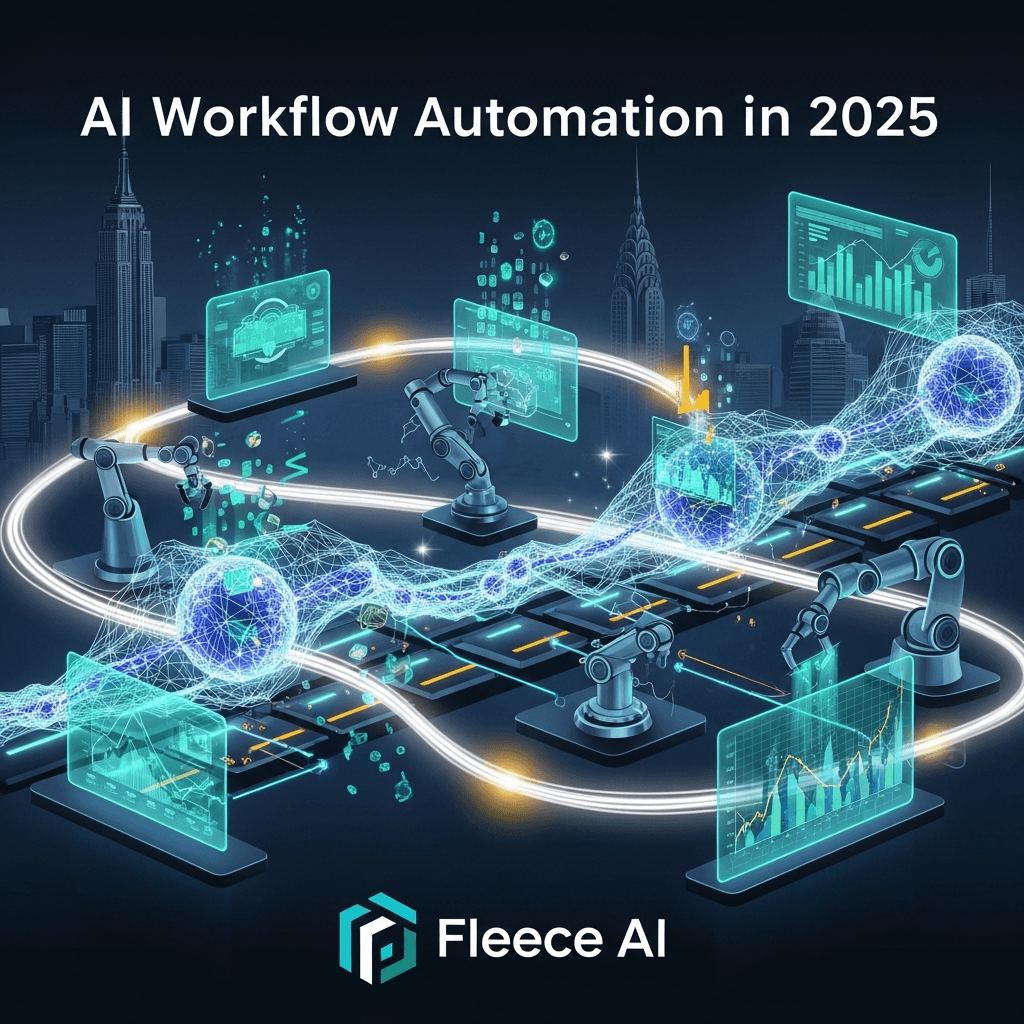
Direct Answer: AI workflow automation integrates generative AI models into business processes via APIs. It captures unstructured data, analyzes it using LLMs (like GPT-5 or Claude Opus 4.5), and autonomously executes decisions across software stacks using orchestration tools like Make, n8n, or Python scripts, transforming rigid rules into dynamic, context-aware operations.
In high-velocity markets like Dubai and Abu Dhabi, speed is the primary differentiator. Traditional automation (RPA) handles repetitive tasks well, but it breaks the moment a variable changes. AI Workflow Automation solves this by adding a cognitive layer to your operations.
The Mechanics: Anatomy of an AI Workflow
AI automation is not magic; it is engineering. It functions by connecting three distinct layers:
The Trigger (Input): A specific event initiates the workflow. This could be a new email, a database update, or a webhook payload.
The Cognitive Layer (Processing): This is where the "AI" lives. Data is sent via API to a model (e.g., OpenAI's GPT-5 or Anthropic's Claude Opus 4.5). Unlike basic code, the AI creates structure from chaos—extracting sentiment, summarizing PDFs, or generating code snippets.
The Execution Layer (Output): Structured data is routed to your apps. We utilize low-code platforms like Make and n8n, or custom Python environments to push this data into Salesforce, HubSpot, or Slack.
Comparative Analysis: RPA vs. AI Automation
To understand the ROI, you must distinguish between standard automation and AI-driven workflows.
Feature | Traditional Automation (RPA) | AI Workflow Automation |
|---|---|---|
Data Handling | Structured only (Excel rows, forms) | Unstructured (Emails, Audio, PDFs) |
Flexibility | Rigid (Breaks if format changes) | Adaptive (Understands context) |
Tech Stack | Zapier (Basic), legacy scripts | n8n, LangChain, Pinecone (Vector DB) |
Maintenance | High (Frequent rule updates) | Low (Self-correcting logic) |
Concrete Use Case: Automated Inbound Lead Qualification
At Fleece AI Agency, we implement the following architecture for B2B clients to eliminate manual lead triage:
Data Ingestion: A lead fills a form. Make captures the data immediately.
Enrichment: The workflow queries Clearbit or LinkedIn to gather company data.
Cognitive Scoring: An OpenAI Assistant analyzes the lead's open-ended message against the client's Ideal Customer Profile (ICP). It determines intent and budget probability.
Routing & Response:
If high priority: The lead is pushed to the CRM with a "Hot" tag, and the Sales Director in Dubai is alerted via Slack.
If low priority: A personalized, nurturing email is drafted and sent automatically.
Conclusion
AI workflow automation moves your business from reactive to proactive. It allows your workforce to focus on strategy rather than data entry. However, implementation requires precise engineering to avoid hallucinations or API latency.
Fleece AI Agency specializes in building these secure, high-performance infrastructures. We do not sell generic templates; we engineer bespoke B2B solutions.
Ready to optimize your operational architecture? Contact Fleece AI Agency today for a technical audit of your current workflows.
📩 Contact: contact@fleeceai.agency
©2025 Fleece AI. All rights reserved.